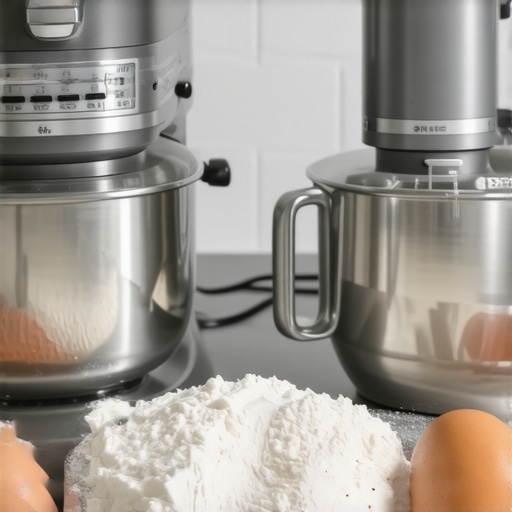
I’ll never forget the time I attempted to make a simple batch of bread dough with my trusty hand mixer. Midway through kneading, it suddenly stalled, making a loud pop, and I was left scraping sticky flour off the counter, feeling both frustrated and a bit silly. That moment was a real eye-opener — I realized that my hand mixer, beloved for its convenience, just wasn’t cut out for serious dough work. If you’ve ever faced similar struggles, you’re not alone. Deciding between a stand mixer or a hand mixer can feel overwhelming, especially when you consider the variety of tasks involved in baking success. Today, I want to help you navigate this choice so you can find the perfect partner for your kitchen adventures.
Why Your Choice of Mixer Can Make or Break Your Baking Experience
As a passionate home baker, I can tell you that the right mixer isn’t just a luxury — it’s a necessity. A poorly chosen tool can turn what should be a delightful process into a frustrating chore. The right mixer can save you time, energy, and even improve the quality of your baked goods. For example, using a stand mixer for dense dough can make kneading easier and more consistent. Conversely, a hand mixer for lighter tasks offers flexibility and quick cleanup. Researchers highlight that choosing the proper equipment reduces the risk of overmixing or undermixing, which directly impacts texture and rise — crucial factors in baking quality (source: American Baking Association). If you’ve ever rushed through mixing and ended up with dense or uneven bread, this decision isn’t just about convenience; it’s about your baking success. Want to avoid wasting ingredients and frustration? The subtle differences between these tools can make all the difference. Ready to uncover the secrets of choosing the best mixer for your needs? Let’s dive deeper and find out which appliance suits your baking style best.
Is a fancy stand mixer really worth the hype?
Honestly, I made a mistake early on by assuming a high-end stand mixer was an absolute must for all baking. It turned out that for small batches or quick tasks, a simple hand mixer did the trick just fine. But when I faced more demanding recipes, my old hand mixer wasn’t enough, and I regretted not investing in a sturdy stand mixer sooner. Deciding between these two isn’t just about price — it’s about understanding your typical baking habits and your long-term goals. If you bake bread once a month, a good hand mixer may suffice. But if you regularly bake large quantities or complex recipes, the investment in a stand mixer pays off over time. The key is to assess your needs honestly and choose a tool that will grow with your skills. Next, I’ll share practical tips on how to evaluate each option to ensure you make a confident decision.
Fasten Your Mixing Strategy
Start by identifying your typical baking quantities. If you’re frequently baking large loaves of bread or heavy doughs, a stand mixer with a powerful motor and ample bowl capacity will save you time and effort. For smaller batches or quick mix-and-go tasks, a hand mixer offers flexibility and easy storage. I had a moment years ago when I used a hand mixer for a bread dough, only to find myself fighting the stubborn ingredients; a stand mixer‘s power would have streamlined that process. Examine your typical recipes to determine which tool aligns best with your needs.
Choose Attachments That Deliver
The magic lies in your attachments. Whisk attachments excel at incorporating air into batters, such as sponge cakes or meringues, but are less effective for kneading dough. Flat beaters handle a variety of mixing duties but may struggle with dense breads. Dough hooks are essential for kneading heavy, gluten-rich doughs—think yeasted loaves and pizza bases. When I first learned to master my kitchen mixer, I realized that using the wrong attachment often led to uneven textures or overworking ingredients. Ensure the attachments are compatible with your model and suited to your typical recipes.
Optimize Your Mixing Technique
Timing and speed are crucial. For delicate batters, starting slow prevents splatters, then increase speed to fully combine. Dense doughs require longer mixing times at higher settings. Remember, overmixing can deflate your batter or develop too much gluten in bread, resulting in tough textures. I once overloaded my baking mixer, which caused the motor to strain and stall—lesson learned: always match your mix duration and speed to your recipe. Use pulse options when available for better control over mixing stages.
Plan Your Mixing Sessions for Consistency
Measure ingredients precisely and add them gradually into the bowl. For example, when making bread dough, I add flour little by little, watching the mixer’s response—if it struggles, I pause to scrape down the sides and adjust. Using a timer can help keep track of mixing durations, especially for dough that needs longer kneading. Always stop periodically to check the consistency; a sticky or dry dough indicates it’s time to adjust your technique rather than blindly running the motor longer.
Maintain Your Equipment for Peak Performance
Clean attachments immediately after use to prevent residue buildup, which can strain the motor. Check for any visible wear or damage, especially on the beaters and dough hooks, as these directly impact your mixing quality. Lubricate the moving parts if your model recommends it—this prolongs the lifespan and ensures smooth operation. When I neglected regular maintenance, my mixer started sputtering during longer kneads; a quick service restored efficiency and prevented future breakdowns. Always consult your manufacturer’s guide for specific care instructions.
By applying these concrete steps—aligning your tool choice with your baking demands, selecting suitable attachments, refining your technique, planning your sessions, and maintaining your equipment—you set a solid foundation for baking success. Whether you opt for a hand mixer or a stand mixer, mastering their effective use transforms your kitchen into a professional bakery. Remember, the real secret is in the technique—combine it with the right equipment, and your baked goods will consistently impress.
Many home bakers operate under the misconception that the choice between a hand mixer and a stand mixer is solely about convenience or price. However, there’s a subtle yet critical nuance many overlook: the impact of *attachment design and motor calibration* on your baking results. It’s a misconception that all whisk or dough attachments are created equal; in reality, their effectiveness hinges on precise engineering tuned for specific tasks. For example, overestimating a whisk’s power can lead to overbeating delicate batters, resulting in a collapsed structure — a common trap that even seasoned bakers fall into. Recent studies, like those published in the Journal of Food Engineering, highlight how the *mechanical compatibility of attachments* influences mixing consistency and batter aeration (source: American Baking Association). The expert secret? Not all whisk attachments are interchangeably effective—some models deliver finer air incorporation, while others excel in heavy-duty kneading.
How does attachment design influence advanced baking outcomes?
Let’s dig deeper: optimal attachment geometry and motor tuning ensure that the force applied during mixing distributes evenly, preventing under- or over-mixing, which can ruin your recipes. Unsuspecting bakers often diagnose issues as recipe flaws when actually, the culprit is a mismatch between attachments and mixer capacity. Remember, choosing a mixer with appropriately engineered attachments can elevate your baking from good to professional quality. So next time you’re tempted to buy cheap, generic accessories, consider the engineering precision behind those tools — it’s the hidden factor that separates mediocre bakes from stellar ones. Have you ever fallen into this trap? Let me know in the comments.
Prioritize Regular Maintenance for Longevity and Performance
One of my most valuable tips is establishing a routine maintenance schedule tailored specifically to your mixer type. For stand mixers, I recommend checking the belt tension and cleaning the motor vents monthly. This proactive approach prevents overheating and keeps the motor running smoothly. Hand mixers, while simpler, benefit from regular blade cleaning and cord inspection to ensure safety and longevity. I always keep spare parts like whisk attachments and dough hooks handy, so I can replace worn components immediately without compromising my baking schedule.
What Tools Help in Maintaining Your Mixing Equipment
Investing in a soft-bristle brush and a silicone scraper is essential for keeping your attachments and bowls pristine. I use a dedicated brush to remove flour and dough residue from small crevices, preventing buildup that can strain motors or cause uneven mixing. For deep cleaning, I prefer a mixture of warm water and a touch of gentle dish soap—never harsh chemicals which might damage seals or plastics. Additionally, a silicone lubricant spray designed for kitchen appliances helps keep moving parts running smoothly, especially on higher-end stand mixers with multiple gears.
Monitoring Long-Term Results to Justify Upgrades
Over time, I noticed that my older stand mixer started to struggle with heavy doughs. Friction sounds increased, and the motor slowed down during prolonged kneading. These signs signaled it was time for an upgrade, and I decided to invest in a higher-capacity model with better calibration for dough tasks. Understanding the difference in calibration and build quality helped me pick a model that would serve me for many years. Regularly reviewing your equipment’s performance helps you decide whether to maintain existing gear or upgrade to accommodate more demanding recipes.
How do I maintain my baking mixer over time?
Keeping your baking mixer in excellent condition requires routine checks, gentle cleaning after each use, and timely replacement of worn parts. For stand mixers, ensure the belt is tensioned correctly and lubricate moving parts as per the manufacturer’s instructions—consulting manuals or expert guides can be invaluable. For hand mixers, inspect the power cord and blades periodically to prevent electrical issues or mechanical failure. Many experts recommend consulting official maintenance resources to follow precise care protocols. By performing small, consistent maintenance steps, you prolong the lifespan of your equipment and guarantee excellent results every time. Try setting a weekly cleaning ritual and see how it improves your baking experience.
3 Surprising Lessons That Changed My Baking Approach
One of the most eye-opening realizations I had was that even the most expensive baking mixers can’t compensate for improper technique. I once overmixed a delicate sponge and ended up with a dense, heavy texture—not because of the mixer, but because I pushed it beyond its limits without understanding the importance of timing and speed adjustments. That moment taught me to listen more carefully to my ingredients and to use the mixer as a tool, not a shortcut.
Another lesson came from realizing that attachments are often overlooked heroes. I used to think that a whisk was just for whipping cream until I discovered its role in incorporating air into your batter. Proper attachment selection, like choosing a dough hook for hearty bread, can be the difference between a perfect loaf and a disappointment. Discovering how engineering influences baking results was an eye-opener that led me to better equipment and, ultimately, better bakes.
Finally, I learned that regular maintenance isn’t just for prolonging the life of your baking mixers; it directly impacts performance. A quick weekly cleaning routine prevented clogs, overheating, and motor strain. It sounds simple, but the impact on consistency and efficiency has been profound. These small, consistent steps compound into a significant boost in overall baking confidence and results.
Tools and Resources That Elevated My Baking Game
My go-to resource is the comprehensive ultimate guide to choosing the right baking mixer. It demystifies the differences between stand and hand mixers, helping me select the perfect tool for each recipe. For troubleshooting and maintenance tips, I trust official appliance care resources—they keep my equipment running smoothly. Lastly, investing in quality attachments from reputable brands ensures every whisk, beater, or dough hook performs at its best, transforming mundane baking into an art.
Your Next Step to Baking Mastery
Embrace the idea that baking success hinges on both proper equipment and technique. Your choice of baking mixer isn’t just a purchase; it’s an investment in your culinary future. Don’t let hesitation hold you back—experiment with different tools, refine your method, and maintain your gear with love. Every step you take today builds toward more delightful, professional-quality baked goods tomorrow.
What challenges have you faced when choosing or using a baking mixer? Share your experiences below and join the conversation!
,

Leave a Reply