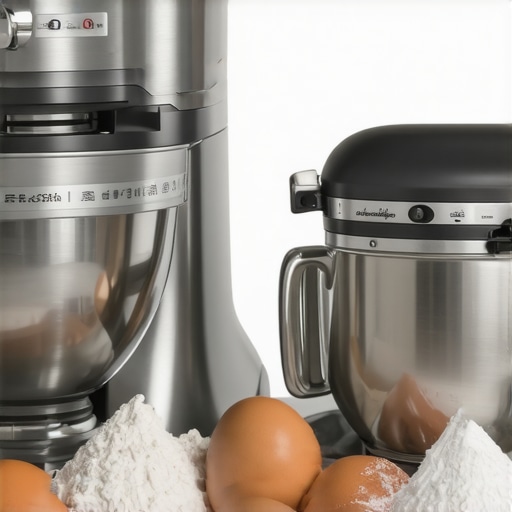
I’ll admit it—there was a time I thought any mixer would do. But one disastrous attempt to whip stiff egg whites with a flimsy hand mixer nearly ended my baking ambitions. The beater kept slipping, and I ended up with a watery mess instead of fluffy peaks. That’s when the lightbulb went off—choosing the right mixer isn’t just about convenience; it’s about achieving baking perfection.
Why Your Choice of Mixer Can Make or Break Your Baking Success
Ever found yourself stuck in the middle of a recipe, frustrated because your tool just isn’t cooperating? I’ve been there. The right mixer can significantly affect the texture and consistency of your dough or batter, which means the difference between a bakery-quality cake and a readjusted, stressful mess in your kitchen. With so many options out there, making an informed decision feels overwhelming, especially when so much of the market is flooded with hype.
Is the Buzz About Stand Mixers or Hand Mixers Actually Worth the Hype?
In my early days, I fell for the shiny allure of fancy stand mixers without considering my baking needs. I quickly learned that a cheap stand mixer struggled with thick doughs, while a powerful hand mixer could handle more delicate tasks—provided I chose the right attachments. According to recent research, the right mixer not only improves your baking but also reduces effort—boosting overall kitchen efficiency (source: Baking Business).
Have you faced similar dilemmas? Deciding between a stand mixer and a hand mixer can feel like choosing between a reliable companion and a versatile tool, each with its advantages and pitfalls. So, how do you pick the best for your baking adventures in 2024? That’s what I’m here to help you figure out, starting with some practical insights and honest evaluations.
Assess Your Baking Needs Clearly
Start by identifying what recipes you’ll make most often. If you bake dense bread or cookies regularly, prioritize power and torque in your mixer. I once tried mixing stiff bread dough with a lightweight hand mixer, and it was a complete mess—resulting in overworked motor and uneven kneading. Recognizing my specific needs helped me choose a stand mixer with a strong motor and dough hook, streamlining my process.
Match Your Mixer to Your Dough Types
Consider the consistency of your typical doughs. Light batters and whipped creams require gentle speed and fine attachments, while heavy, kneaded doughs demand robust mixing power. For delicate tasks like whipping egg whites, a mixer with a planetary rotation—like many stand mixers—provides even aeration. I recall using a stand mixer for meringue, which created voluminous peaks in seconds, compared to a hand mixer that struggled and slumped the whites.
Select Attachments That Boost Performance
Attachments aren’t just accessories—they’re essential tools. Whisking, beaters, dough hooks—each designed for specific tasks—can turn your mixer into a multi-purpose device. When I needed to incorporate air into a soufflé, switching to the balloon whisk attachment made all the difference, giving me light, fluffy results. Check compatibility and quality to ensure durability and effective performance; many models now support versatile attachments, elevating your baking game.
Prioritize Speed and Control Options
Look for multiple speed settings that give you precise control. For example, low speeds are perfect for combining ingredients without splashing, while high speeds whip creams or egg whites efficiently. During my last cake baking session, I used slow speeds to combine flour, then cranked up to high to whip frosting, saving time and effort. A good mixer offers safety features like overload protection—critically important when handling stiff dough or thick batters.
Pay Attention to Ease of Use and Maintenance
Choose a model with an ergonomic design and easy-to-clean parts. Some mixers have tilt-head or removable bowls for quick access, which I found invaluable when cleaning flour residue. Maintaining your mixer ensures longevity and consistent performance, especially if you bake frequently. Regularly inspecting and cleaning attachments prevents buildup that could compromise the mixing quality.
Test Power and Efficiency in Real Scenarios
If possible, test your shortlisted models with actual doughs or batter. I visited a local store and asked for a demo with my typical bread dough—seeing the motor handle the workload confidently reassured me I chose wisely. For online shopping, read detailed reviews focusing on similar use cases. According to product comparisons, models with higher wattage generally perform better for heavy mixes, but balanced design matters too.
Compare Stand and Hand Mixers Wisely
Balance portability versus capacity based on your kitchen space and baking volume. I initially favored a hand mixer for its convenience, but after tackling large batches, I switched to a stand mixer for its stability and power in handling big doughs. Your choice should align with your baking frequency, recipe complexity, and storage options—this is how you master consistent results.
For further insights into making the optimal choice, consider reviewing detailed comparisons and guides, like this comprehensive guide. Proper selection, grounded in your specific baking goals, is the cornerstone of professional-quality results in your own kitchen.
 While it might seem counterintuitive, many home bakers overlook critical nuances that can make or break their results when choosing between stand mixers and hand mixers. A common misconception is that higher wattage always equates to better performance, but in reality, the motor’s design and transmission system play crucial roles in handling tough doughs. Relying solely on wattage can lead to selecting a machine that overheats or stalls during intensive tasks, which is why understanding the underlying engineering is essential (source: Cooking Tech Insights). Furthermore, many users underestimate the importance of planetary rotation in stand mixers; this feature ensures even mixing and effective kneading, especially for dense bread doughs. If ignored, it can result in uneven texture and inconsistent rise. In my years of experimentation, I’ve noticed that attachments matter more than most realize. Using incompatible or low-quality whisks or dough hooks can diminish performance, cause wear and tear, or even damage the machine. The performance of whisk attachments, for example, hinges on their weight and balance; a poorly balanced whisk can vibrate excessively, leading to fatigue and inconsistent aeration—especially in delicate tasks like meringues. Conversely, many think that the choice between stand and hand mixers is purely about convenience, but the real distinction lies in the *control* mechanisms and how they influence mixing precision. Modern stand mixers often incorporate electronic controls for variable speeds and digital timers, which can significantly improve consistency when whipping or kneading. Neglecting these subtleties often results in overmixing or undermixing, compromising the final product’s quality. Do you ever fall into this trap of simplifying the complex? Understanding the advanced mechanics behind these tools can dramatically elevate your baking game. For instance, selecting a mixer with a robust transmission system and thoughtful design can prevent “overloading” the motor—a common mistake that leads to early failure. Just like mastering ingredients, mastering your equipment nuances yields bakery-quality results at home. To stay ahead, dive into detailed reviews and technical comparisons, like the comprehensive guide on this resource. Recognizing these hidden factors ensures you’re not just buying a mixer but investing in a reliable kitchen partner.
Keep Your Mixer Running Smoothly for Perfect Bakes
Investing in a high-quality stand or hand mixer is only the first step; diligent maintenance ensures consistent results and longevity. Regularly inspecting attachments for wear and tear, such as cracked beaters or dough hooks, can prevent performance issues before they start. I personally make it a habit to clean my attachments immediately after use, using warm, soapy water to remove residual batter or flour, which helps prevent buildup that can affect mixing efficiency.
Lubricating moving parts, when applicable, reduces friction and wear. For most modern kitchen mixers, this isn’t necessary, but consulting the user manual for specific maintenance routines is wise. Additionally, keep the motor vents clear of dust and debris to prevent overheating, especially if you frequently bake large batches or dense doughs.
Using quality tools and accessories compatible with your model enhances performance and reduces strain on the motor. For example, sticking to manufacturer-recommended whisk or dough hook attachments ensures optimal fit and balance, which directly impacts mixing effectiveness. Over time, replacing worn-out parts can save you money and avoid abrupt breakdowns during critical baking moments.
How do I maintain my mixer over time?
Adopting a routine of thorough cleaning after each use, periodic inspection for signs of wear, and timely replacement of accessories keeps your mixer functioning at peak performance. Also, store your mixer in a dry, dust-free environment to prevent corrosion and damage. For high-wattage models, consider checking the power cord and plug periodically for damage, as this can pose safety hazards and cause inconsistent power flow.
Looking ahead, advancements in materials and design are making mixers more durable and easier to maintain. Manufacturers are increasingly offering modular components and self-cleaning features, which could revolutionize how we care for our kitchen tools. Staying informed about such innovations can help you select equipment that minimizes long-term maintenance worries.
To really enhance your mixer’s lifespan, I recommend trying out a maintenance tip from expert sources—like applying a light coat of food-grade lubricant to gear mechanisms if accessible—as discussed in this detailed article. Regular upkeep isn’t just about reliability; it’s about consistently producing bakery-quality results without unexpected hiccups. So, don’t wait—start implementing a simple maintenance routine today to enjoy flawless dough every time.
Reflecting on my baking journey, one lesson remains crystal clear: understanding the subtleties of your mixer can transform your results from good to truly professional. The more I experimented, the more I realized that selecting the right equipment isn’t just about convenience—it’s an investment in your craft. Whether it’s the meticulous balance of attachments or the advanced engineering behind a stand mixer, every detail plays a pivotal role in elevating your baking potential.
What I Wish I Did Differently When Choosing My Mixer
- Prioritized build quality over brand prestige: I discovered that a sturdy, well-designed mixer withstands the test of time, making regular baking sessions feel effortless. Skimping on quality meant frequent replacements, which hindered my progress.
- Focused on the specific tasks I perform most often: I realized that knowing my typical recipes—be it dense bread or delicate meringues—guided me toward models with tailored features like planetary rotation or specialized attachments. Tailoring my choice saved me time and frustration.
- Tested the machines with real ingredients rather than just reviews: Watching a demo with my own dough in-hand made all the difference. Seeing how a mixer handled my thickest batter or fragile egg whites gave me confidence in my selections.
- Invested in versatile attachments early on: Having a variety of quality tools, such as balloon whisks and sturdy dough hooks, enabled me to push my baking limits and experiment with new recipes. Compatibility is key—don’t overlook it in your selection process.
- Committed to regular maintenance: Simple routines like cleaning attachments immediately and inspecting mechanical parts extended my equipment’s life and ensured consistent performance in every batch.
Where I Stay Inspired for Better Baking Tools
- This comprehensive guide opened my eyes to subtle differences between models, helping me make smarter choices.
- Expert reviews keep me updated on the latest innovations and best practices for equipment longevity and performance.
- Detailed comparison articles give me clarity when choosing between stand and hand mixers, tailored to my baking style.
- This resource offers insights into specific use cases and performance tips that I turn to regularly.
Take Your Passion to the Next Level
Don’t let uncertainty hold you back from unlocking your full baking potential. The perfect mixer, paired with attentive maintenance and understanding, can turn any home cook into a baking artist. Trust yourself to choose tools that resonate with your style, and watch as your kitchen transforms into a bakery-quality space. Remember, every great baker started where you are now—making small, confident choices every day.
What’s the toughest decision you’ve faced when selecting baking equipment? Share your story and tips below—I’d love to hear how you’ve learned and grown through your choices!
suestions.

Reading this post really resonated with my own experience. I used to think I could get away with a basic hand mixer until I tried to make whipped cream for a special occasion. It was a disaster—whipping took forever, and I ended up with burnt-out arms! That’s when I invested in a good stand mixer, and it totally transformed my baking routine. Now, I can whip egg whites or knead dough effortlessly, which has made me more confident experimenting with recipes. I believe the key is understanding your baking needs—do you mainly bake light batters or dense bread? Also, the ability to switch attachments adds so much versatility. Has anyone here had to upgrade their equipment after realizing their initial choice wasn’t enough? I’d love to hear about your journey and tips for choosing the right mixer for different recipes.