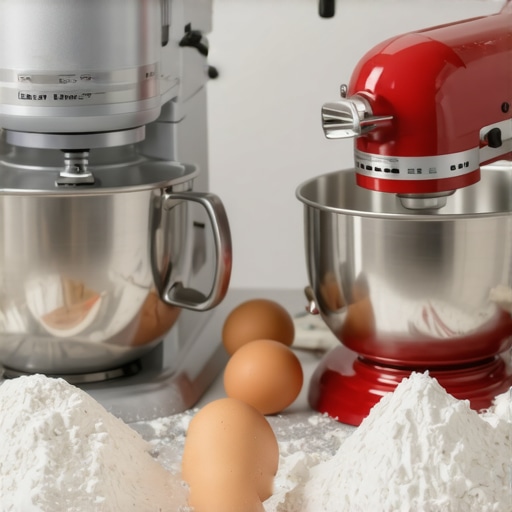
Picture this: I was elbow-deep in flour, trying to whip up my grandma’s secret biscuit recipe, only to realize my trusty hand mixer was struggling to incorporate the thick, sticky dough. Frustration crept in as I battled with uneven mixing and aching arms. It struck me then—my equipment was holding me back, and I knew I had to choose wisely between a stand mixer and a handheld one for my baking adventures.
Choosing the Right Mixer Can Transform Your Baking Game
For home bakers like you and me, selecting the perfect mixer isn’t just about gadgets—it’s about making baking less of a chore and more of a joy. Whether you’re kneading dense bread dough or whipping airy meringues, the right tool can save time, effort, and frustration. But with so many options, how do you decide which one truly fits your needs? Today, I promise we’ll break down the differences, share personal insights, and guide you toward the best choice—so you can bake with confidence and ease. Curious about the real advantages of each? Keep reading, and let’s find out which mixer makes your baking more enjoyable and less exhausting.
Is the hype around stand mixers justified?
Early in my baking journey, I made the mistake of assuming that a fancy stand mixer would instantly elevate my kitchen skills. Instead, I wasted money on models that were overkill for my simple recipes and underwhelming for dough-heavy tasks. According to expert advice from KitchenTechHQ, understanding the specific strengths and weaknesses of each mixer type can prevent costly mistakes and improve your baking results. Have you ever bought a kitchen gadget that didn’t quite live up to its promise? You’re not alone, and that’s exactly why choosing the right mixer matters. Let’s delve into what makes each option unique and how to make an informed decision that’ll support your baking goals rather than hinder them.
Set Up Your Equipment Properly
Start by assembling your chosen mixer on a stable, flat surface. Attach the appropriate beaters or dough hooks based on your recipe. For example, when tackling dense bread dough, ensure your dough hooks are securely in place, similar to how I replaced the standard beater with a dough hook during my last bread baking experiment—this setup allowed me to knead without overworking my arms, resulting in a perfectly developed loaf.
Choose the Right Attachments for Your Tasks
Use whisk attachments for airy tasks like meringues or whipped cream. For mixing cake batter, standard beaters work best. For dense doughs, such as for pizza or bread, switch to dough hooks. When I made my favorite sourdough, I replaced the beaters with dough hooks to simulate hand kneading, which saved time and effort while giving me a better gluten structure.
Master the Mixing Technique
Begin by setting your mixer speed low to prevent splattering. Gradually increase as ingredients combine, similar to slowly turning up music volume so the beaters don’t throw flour everywhere during my first attempt at making croissant dough. For delicate air incorporation, like folding egg whites, use the lowest speed with gentle, steady mixing to avoid deflating the mixture.
Maintain Consistent Movement
If your recipes require mixing in stages, pause and scrape the sides of the bowl with a spatula to ensure even mixing. This step is crucial when making buttercream or thick batters, as I learned when I stopped my mixer to scrape the bowl during a cake-frosting experiment—this small action prevented lumps and ensured smooth frosting.
Optimize Speed Settings for Best Results
Use low speeds for initial mixing, medium for thorough blending, and high for whipping or aerating. For instance, when beating egg whites, I used high speed to achieve stiff peaks faster, but I stayed alert to prevent overbeating, which caused I experienced with over-whisked meringue—resulting in a dry, grainy texture. Experimenting with speed control is key to mastering your mixer for diverse recipes.
Monitor Your Mixing Progress
Check the consistency regularly to avoid overmixing, which can ruin delicate cakes or dense doughs. During my last batch of sponge cake, I kept a close eye and stopped mixing the batter once it was just combined, yielding a light, fluffy crumb—an outcome that overmixing would have ruined.
Clean and Maintain Your Mixer
After each use, detach and wash attachments promptly to prevent build-up. Wipe the main body with a damp cloth, avoiding internal motor components. During a recent baking spree, I cleaned mine immediately after a heavy dough kneading session—this prevented flour residues from hardening and made the next baking session smoother. Proper maintenance extends your equipment’s lifespan and guarantees consistent results.
Adjust Technique Based on Recipe Feedback
If your baked goods aren’t turning out as expected, revisit your mixing method. For dense breads, longer mixing with kneading hooks is essential, while delicate cakes require gentle, short bursts to keep the batter tender. Remember, every recipe responds differently to your technique, so stay adaptable to achieve baking success.
For more detailed insights and tailored advice, check out the comprehensive comparison of stand vs. hand mixers and discover how to fine-tune your choice for specific tasks. Mastering these steps ensures your baked goods not only look professional but taste incredible, turning every bake into a rewarding experience.
Many home bakers operate under misconceptions about the capabilities and limitations of stand mixers, hand mixers, and their various attachments. One common myth is that higher wattage always translates to better performance, but in reality, power alone doesn’t determine how well a mixer performs, especially when it comes to delicate tasks like whisking egg whites or kneading dough. It’s essential to consider the design of the motor and the quality of attachments, as these influence efficiency and durability. Also, many assume that a stand mixer can handle all types of dough without issue; however, overloading it or choosing an underpowered model can lead to motor burnout or uneven mixing. Expert insights from KitchenTechHQ emphasize that matching your mixer to your specific baking needs prevents unnecessary frustration and equipment failure.
Are High Speeds Necessary for Fluffy Meringues or Can Low Speeds Suffice?
One overlooked nuance is the speed setting during whisking. While many think that cranking the mixer to maximum speed is the best way to achieve volume, this can sometimes cause splattering or even deflate delicate mixtures. Using moderate speeds with patience often yields better results, as a study on aeration techniques suggests that gentle, consistent motion preserves the integrity of air bubbles (source: PLOS ONE). Advanced bakers understand that exceeding recommended speeds doesn’t necessarily improve quality and may compromise the texture of your final product. Have you ever fallen into this trap? Let me know in the comments.
Tools I Recommend for Lasting Performance
Investing in quality tools is the first step toward ensuring your mixer remains a reliable partner in your baking journey. I personally swear by Kitchenaid Professional 600 Series for its robust motor and durability, especially when tackling heavy doughs with its powerful dough hooks. For whisk attachments, I prefer the wire whisks from Bosch due to their resilience and excellent aeration capabilities. Additionally, I always keep a specialized maintenance kit on hand, including essential lubricants and replacement parts, which significantly extends the lifespan of my equipment.
How do I maintain my mixer over time?
Consistent maintenance is crucial. After each use, I remove and wash the beaters and dough hooks thoroughly to prevent residue build-up. Wiping down the exterior with a damp cloth avoids dust and flour collection. I also periodically check the belt tension and motor vents; keeping these parts clean ensures smooth operation. For a deeper tune-up, I follow the manufacturer’s service instructions or consult a professional technician—especially if I notice unusual noises or vibrations. Regular lubrication with manufacturer-approved oil, as recommended in this guide, helps prevent wear and tear on moving parts. In the future, I predict that smart diagnostics and predictive maintenance features will become standard, making it easier than ever to keep your equipment running flawlessly for years to come.
The Importance of Proper Attachment Care
With all the different whisk attachments, dough hooks, and beaters, proper care extends their lifespan and maintains performance. I recommend: hand-washing and drying attachments immediately after each use; avoiding dishwashers unless specified; and inspecting for any cracks or bends that could compromise stability. For example, when I noticed a slight wobble in my dough hook, I replaced it promptly, preventing uneven mixing and potential motor strain. Using the right attachment for each task, as discussed in this resource, not only preserves equipment but also enhances baking quality.
Predicting the Future of Mixer Maintenance
As technology advances, expect to see more integrated sensors that monitor motor health and attachment wear in real-time. IoT-enabled mixers could notify you when maintenance is due or predict potential failures before they happen—saving time, money, and frustration. Embracing these innovations now by choosing mixers with smart features, like models reviewed in this guide, will ensure your baking setup remains efficient and long-lasting.
Don’t overlook your tools—regularly inspecting, cleaning, and upgrading your equipment is the secret to achieving consistent, top-tier baking results. Try adopting a maintenance routine that suits your workflow, and your mixer will reward you with years of reliable service.
The Hardest Lessons I Learned About stand mixer,hand mixer,dough mixing,baking mixer,whisk attachments
One of the most valuable insights I’ve gained is that **more power isn’t always better**. Early on, I believed that investing in an ultra-high wattage stand mixer would solve all my baking problems, but I soon discovered that the quality of attachments and motor design matter more. Also, I underestimated how subtle adjustments, like the right speed and attachment choice, can dramatically improve results. Don’t fall into the trap of thinking bigger is always better—sometimes, finesse, patience, and learning the nuances lead to baking mastery.
The Myth of Universal Attachments—Why Specific Matters
I once thought I could use my whisk for everything, from whipping egg whites to mixing dense dough. Wrong. Recognizing that **each attachment has a vital role** transformed my baking. Using the correct whisk for aeration, the dough hook for kneading, or beaters for creaming ensures optimal performance. It’s tempting to save time by skipping attachment changes, but I’ve seen consistent improvements when I switch deliberately based on what I’m making—this simple shift has boosted my confidence in achieving bakery-quality results at home.
Patience Is a Baking Virtue—Don’t Rush the Mixing Process
Waiting for the mixer to reach the right speed and watching the texture change gradually has been a revelation. Rushing can lead to overmixing or underdeveloped dough, compromising texture and flavor. I’ve learned that **listening to the dough’s behavior**—not just preset times—delivers superior outcomes. Whether it’s softly folding in egg whites on low speed or gradually increasing to whip air into meringue, patience makes the difference between average and extraordinary baked goods.
My Essential Toolkit for stand mixer,hand mixer,dough mixing,baking mixer,whisk attachments
I trust the KitchenTechHQ comprehensive reviews to select reliable tools that stand the test of time. For heavy-duty kneading, I prefer the Kitchenaid Professional 600 Series for its durability. When it comes to whisking, I opt for the resilient wire whisks from Bosch. These tools have consistently enhanced my baking experience, making me more efficient and confident in the kitchen. Good tools remove guesswork and elevate your craft, so invest wisely and maintain your equipment properly to enjoy years of baking success.
Take Your Baking Into Your Own Hands Today
Baking is a blend of science and artistry, and the right mixer is your loyal partner in that journey. Don’t let doubts or outdated habits hold you back—embrace the learning curve, experiment with your equipment, and celebrate your progress. Remember, every great baker started with simple tools and a willingness to learn. If you’re ready to refine your skills, explore the best options for you in my detailed guides, and soon, your baked goods will speak volumes about your dedication. Keep mixing, keep learning—your perfect bake is just around the corner.

Reading this post really resonated with my own experience of switching from a hand mixer to a stand mixer. I used to struggle with sticky bread dough and sore arms, and investing in a good stand mixer changed the game for me. What’s fascinating is how much the right attachment—like dough hooks—makes a difference. I’ve also found that mastering the appropriate speed settings is key; pushing too hard on high speeds can sometimes break the mixture or cause splattering, especially with delicate batters. Has anyone else noticed how adjusting their speed gradually and using the right tool for the task improves results? I’d love to hear more tips from experienced bakers on optimizing mixer use for various doughs and batters.