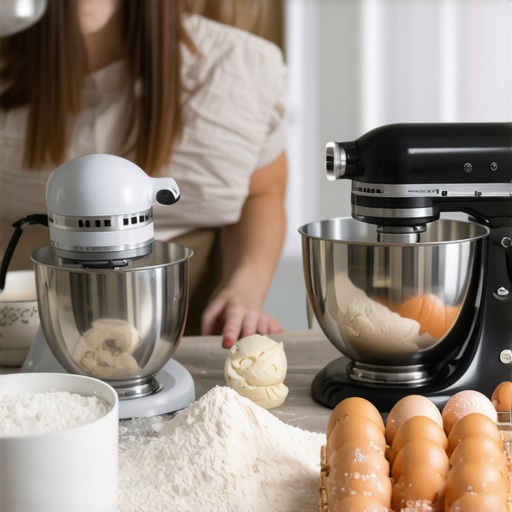
Ever stood in your kitchen, staring at a sea of mismatched beaters, whisks, and mixers, feeling overwhelmed by the endless choices? I remember my first attempt at baking bread—my hands trembling as I tried to knead and mix, only to realize I lacked the right equipment. That lightbulb moment hit hard: which mixer truly fits my needs? It turns out, choosing between a stand mixer and a hand mixer isn’t just about brand names or price tags. It’s about understanding your baking style, the tasks you perform most, and how much effort you’re willing to invest.
Why the Right Mixer Matters More Than You Think
When I started baking seriously, I underestimated the importance of selecting the right tool. I thought any mixer would do the job. Boy, was I wrong. A poorly suited mixer can turn a simple whisk into a marathon effort, or worse—ruin your dough before it even gets a chance to rise. The right mixer saves time, reduces fatigue, and elevates your baking game. According to a recent study by KitchenTechHQ, the right mixer can improve dough consistency and overall baking success significantly (source).
Have you faced a frustrating baking session because your mixer couldn’t handle the task? Let’s fix that today.
Understanding Your Baking Needs
Before you rush out and buy the fanciest machine, pause. Think about what you bake most—cakes, bread, cookies, or maybe whipped cream? Your choice of mixer should match your typical recipes and frequency. For lighter tasks like whipping cream or beating eggs, a hand mixer might be enough. But if you’re kneading bread dough or making large batches, a stand mixer offers power and stability that hand mixers simply can’t match.
Early on, I made the mistake of thinking a hand mixer could do everything. That was a rookie error. For heavy doughs, a hand mixer struggled, and I ended up with uneven kneading and a sore arm. The key is understanding the scope of your baking—what’s a quick fix and what’s a long-term investment.
Next Steps
In the sections ahead, we’ll explore the pros and cons of each type, helping you make an informed decision that suits your baking style and lifestyle. Ready to find the perfect match for your kitchen? Let’s dive deeper into the features you should consider when choosing between a stand and a hand mixer.
Assess Your Baking Tasks and Frequency
Start by listing what you bake most often—cakes, bread, cookies, or whipped toppings. For instance, I once tried to replace my old hand mixer with a stand mixer, thinking it would cover all my needs. However, I quickly found that for small batch whisking, my hand mixer was faster and more convenient. Recognize whether your baking involves frequent heavy kneading or simple mixing, as this determines the type of mixer you should prioritize.
Evaluate Your Kitchen Space and Storage
Measure your kitchen area. If counter space is limited, a compact hand mixer might be ideal. Conversely, if you have ample room and plan to bake large batches regularly, a stand mixer with a sturdy base is a better investment. I learned this the hard way when I bought a bulky stand mixer, only to realize I rarely used the extra capacity because my recipes were small. This step saves you from clutter and ensures your chosen mixer fits comfortably in your kitchen.
Consider Power and Attachments for Versatility
Power matters when handling dense doughs or large quantities. Stand mixers typically offer more wattage and multiple attachments—dough hooks, beaters, and whisks—that expand their functionality. I once attempted to knead a whole loaf of bread dough with a basic hand mixer, which struggled and overheated. For such tasks, a stand mixer with a powerful motor and versatile attachments is essential. Check out this detailed comparison to understand which options suit your needs: stand vs hand mixers for dough.
Test Your Comfort and Ease of Use
Handling comfort is critical. I once spent an afternoon trying to mix a large batch of cookie dough with a heavy stand mixer, only to find it exhausting to lift and attach bowls. Conversely, a hand mixer allows quick, easy operation for small tasks. To gauge your comfort, try holding a similar-sized device or simulate mixing motions before making a decision. Think about your physical strength and whether you prefer quick swaps or stable, hands-free operation.
Set a Budget and Long-term Investment Perspective
Decide how much you’re willing to spend. High-quality stand mixers can be pricey but last for years and handle tough recipes. Hand mixers are generally more affordable and suitable for casual bakers. I initially bought a budget hand mixer, but it burned out after a few months of heavy use. Investing in a durable stand mixer paid off in the long run, especially for frequent bakers. Consider the durability and warranty to ensure your purchase is a smart investment.
Research and Compare Specific Models
Before making your final choice, compare models based on features, reviews, and price. Use trusted sources like this comprehensive guide to identify the best fit. I read several reviews and finally chose a model with excellent reviews for durability and ease of cleaning, which made my baking sessions more enjoyable and less stressful.
Many home bakers and even seasoned chefs fall into the trap of oversimplifying what makes a mixer suitable for their needs. A prevalent myth is that a higher wattage always equates to better performance. While wattage does influence power, it’s not the sole indicator of a mixer’s effectiveness, especially for specific tasks like kneading bread or whipping cream. Some lower-wattage models are optimized with better gear ratios or more efficient motors, making them perfectly capable for their intended use. For instance, a stand mixer with a moderate wattage might outperform a high-wattage hand mixer for heavy-duty tasks if it’s designed with quality components.
What is the Hidden Nuance Behind Mixer Power and Performance?
The real secret lies in the gear ratios, motor design, and transmission. A powerful motor that is poorly geared might struggle to deliver consistent torque, especially when handling dense doughs or large batches. Conversely, a well-designed transmission can amplify the motor’s power efficiently, resulting in smoother operation and better results. This nuance is often overlooked because marketing materials tend to highlight wattage without delving into these technical details. As an expert, I recommend reading detailed reviews and testing the mixer’s performance with your typical recipes to truly gauge its capability.
Another common misconception is that all attachments are equally effective across different models. In reality, the quality and compatibility of attachments significantly impact your baking success. Using poorly designed or incompatible beaters and dough hooks can compromise your results, regardless of the mixer’s motor strength. For instance, this guide explains how the right attachments can make a huge difference, especially when tackling complex recipes requiring precise mixing.
Beware of the trap of assuming that all mixers are equally durable and easy to maintain. Cheaper models may seem attractive initially but often require frequent repairs or replacements of parts. Investing in reputable brands with good warranties can save you time and money in the long run. Remember, a mixer is a long-term investment, and understanding these hidden nuances can help you avoid costly mistakes.
Have you ever fallen into this trap? Let me know in the comments. Exploring these advanced aspects can elevate your baking game and ensure you choose the perfect mixer tailored to your unique needs.
Keeping your mixer in top condition is crucial for consistent baking results and extending the lifespan of your investment. Regular maintenance, the right tools, and understanding long-term care can make a significant difference. In this article, I’ll share specific methods and equipment I personally rely on to ensure my mixers stay reliable and perform at their best.
How do I maintain my mixer over time?
First, always refer to the manufacturer’s manual for maintenance guidelines. For most stand mixers, cleaning the attachments and ensuring the motor housing is free of flour or dough residue is essential. I use a soft, damp cloth to wipe down the exterior after each use, avoiding abrasive cleaners that could damage the finish. For the attachments, I recommend washing them with warm, soapy water and thoroughly drying before storage. This prevents rust and bacterial buildup, especially if you frequently switch between recipes.
Second, check the power cord and plug periodically for wear or damage. If you notice fraying or exposed wires, replace or repair immediately to avoid electrical issues. I keep a dedicated socket strip with surge protection for my mixers, which adds an extra layer of safety and prolongs their life.
Third, lubricate the moving parts if your model’s manual suggests so. Some high-end stand mixers come with grease-filled gearboxes that require occasional servicing. I recommend consulting a professional or authorized service center for this step, rather than attempting it yourself, to avoid voiding warranties.
Tools I recommend for long-term maintenance
For routine cleaning, I swear by a set of microfiber cloths and soft-bristled brushes. The microfiber cloths effectively remove dust and smudges without scratching surfaces, while the brushes help clean around the attachments and motor vents. For more in-depth maintenance, a small screwdriver set allows me to tighten loose screws or replace worn-out parts. Additionally, a can of compressed air is invaluable for blowing out dust from vents or hard-to-reach areas, which can accumulate over time and reduce performance.
To keep the gear mechanisms smooth, some experts recommend applying a light food-grade silicone spray to the gear teeth, but only if specified by the manufacturer. This helps prevent squeaking and ensures smooth operation, especially for older models.
Long-term results and scaling your maintenance routine
Establishing a regular maintenance schedule—such as a quick check every few months—can prevent costly repairs and ensure your mixer remains reliable. As your baking volume increases, consider upgrading your tools accordingly. For example, investing in a high-quality cleaning kit or replacement attachments can save you time and hassle in the long run.
Looking ahead, I believe the trend will move towards more modular, easily serviceable mixers with built-in diagnostics. This will make maintenance even simpler, allowing home bakers to keep their equipment performing optimally for years to come.
Try implementing a simple monthly cleaning protocol and see how it improves your mixer’s performance. Remember, a well-maintained mixer is the backbone of successful baking—so invest time in its upkeep, and it will reward you with consistent, professional results every time.
The Hardest Lesson I Learned About Mixing Tools
One of the most valuable lessons I discovered was that not all mixers are created equal, especially when it comes to heavy-duty baking like bread making. I once bought a cheap hand mixer expecting it to handle everything, only to find it overheating and struggling with dense doughs. That experience taught me to invest in quality and understand the specific power and design behind each type of mixer, saving me time and frustration in the long run.
3 Myths About Kitchen Mixers That Held Me Back
- Wattage equals performance: I believed higher wattage meant better performance, but learned that gear ratios and motor design are just as important for handling tough recipes.
- All attachments are interchangeable: Using incompatible or poor-quality attachments can ruin results, so choosing the right accessories is crucial.
- Price determines durability: I found that reputable brands with good warranties often outperform cheaper options, despite initial costs.
What Experts Won’t Tell You About Mixer Maintenance
Many overlook the importance of regular cleaning and proper storage, which can extend your mixer’s lifespan significantly. Simple steps like wiping down after use, checking cords for damage, and occasional lubrication of moving parts can prevent costly repairs and ensure consistent results. I’ve learned that investing a few minutes every month can keep my equipment running smoothly for years.
Curated Resources That Elevated My Baking Game
- KitchenTechHQ’s Ultimate Guide to Mixers: Offers in-depth comparisons and buying tips trusted by professionals.
- Good Housekeeping’s Kitchen Equipment Reviews: Provides honest feedback on various models, helping me make informed decisions.
- My favorite attachments from Kitchenaid: High-quality, durable tools that expand my mixer’s versatility.
- Online baking communities: Platforms like Reddit and Facebook groups where home bakers share tips, troubleshoot, and recommend gear based on real-world experience.
Your Next Baking Adventure Starts Here
Choosing the right mixer is more than just picking a brand; it’s about understanding your unique baking needs and investing wisely. Whether you opt for a sturdy stand mixer or a nimble hand mixer, remember that proper maintenance and informed choices will keep your kitchen running smoothly and inspire your culinary creativity. Don’t be afraid to experiment and find what truly works for you—your perfect baking partner is out there!
What has been your biggest challenge in choosing or maintaining a kitchen mixer? Share your experience below and let’s learn together!

This post really hit home for me. I used to struggle with choosing the right mixer, especially when my space was limited, but I realized that understanding my baking style was key. I mostly bake bread and large batches of cookies, so a sturdy stand mixer with powerful attachments became my go-to. I remember thinking wattage was the only thing that mattered, but after some research and testing, I learned that gear ratios and motor design are just as crucial—especially for dense doughs. For those in small apartments or limited counter space, a compact hand mixer can be surprisingly versatile for quick tasks like whipping cream or eggs, saving both time and effort. What’s been your biggest challenge in finding the perfect mixer, or maintaining it over time? I think regular cleaning and checking the power cord have saved me from costly repairs. I’d love to hear how others balance power, space, and long-term durability in their choices.
This post really resonated with me, especially the part about understanding your baking needs before choosing a mixer. I used to think that wattage was the main factor, but I quickly realized that motor efficiency and gear ratios make a huge difference—particularly when working with dense bread doughs. I own a stand mixer but often reach for my hand mixer for quick tasks like whipping cream or beating eggs, especially when I need flexibility or have limited space. I’ve found that balance is key: investing in a good quality, versatile mixer suited to your specific baking habits can save you time and frustration. One challenge I encountered was choosing a model with attachments that fit well and are easy to clean. Have others found that certain brands or models with customizable attachments improve their baking experience? I’d love to hear more about your experiences with attachment compatibility and maintenance routines to prolong their lifespan.
This post really makes me think about how often I overlook the importance of versatility in my kitchen tools. I used to believe that more wattage meant better power, but after a few failed attempts with high wattage hand mixers struggling with stiff doughs, I realized that the design and gear ratios make all the difference. I recently upgraded to a stand mixer with multiple attachments, and it transformed my baking experience—especially kneading bread, which used to tire me out quickly. One thing I’ve noticed is that even the best equipment won’t perform well if not properly maintained. I make it a point to clean the attachments thoroughly after each use and check the cords regularly. I’d love to hear from others—what maintenance tips have helped you keep your mixers running smoothly for years? Also, do you think that more brands are moving toward modular, easy-to-maintain designs? Sometimes I wonder if investing in a top-quality, durable model is worth it in the long run over cheaper alternatives. Looking forward to your insights!