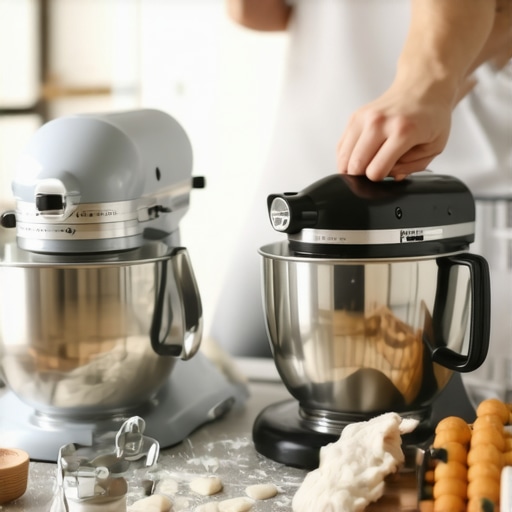
My First Encounter with Baking Mixers: A Personal Tale
Ever since I started baking bread and whipping up desserts at home, I’ve been on a quest to find the perfect mixing tool. I vividly remember the first time I used a hand mixer — it was cumbersome but surprisingly effective for small batches. Over time, I realized that my needs evolved, especially when I started baking larger quantities or experimenting with doughs that required more power.
Why I Began Comparing Stand Mixers and Hand Mixers
As I delved deeper into baking, I discovered that the choice between a stand mixer and a hand mixer significantly impacts your workflow. For instance, I found that stand mixers, with their stability and powerful motors, are excellent for kneading doughs or mixing heavy batters. Conversely, hand mixers offer portability and ease of use for quick tasks, like whipping cream or beating eggs.
My Experience with Whisk Attachments: The Heart of the Matter
Whisk attachments are incredibly versatile and, in my opinion, the real game-changer. They help incorporate air into mixtures, creating that perfect fluffy texture. When I first tried using whisk attachments with my stand mixer, I was amazed at how effortlessly they handled meringues and genoise sponge cakes. However, I also appreciate the convenience of a hand mixer for smaller tasks or when I’m limited on space.
What Makes a Stand Mixer or Hand Mixer the Right Choice?
From my perspective, a stand mixer is ideal if you regularly bake large batches, knead dough, or want a set-it-and-forget-it experience. On the other hand, a hand mixer suits casual bakers or those with limited kitchen space. I’ve found that owning both can be a fantastic solution, allowing flexibility based on the task at hand.
How Do I Know Which is Better for My Baking Style?
Is there a definitive answer to whether a stand or hand mixer is better for whisking?
Honestly, it depends on your baking habits. If I had to choose, I’d recommend considering your typical recipes and volume. For example, if you often bake bread or large cakes, a stand mixer provides more power and stability. For quick tasks like beating eggs or making small batches of frosting, a good hand mixer is more convenient.
In my research, I found that many experts recommend assessing your typical baking volume and the types of recipes you prefer. For instance, if you want to master perfect meringues, investing in a reliable stand mixer with excellent whisk attachments is worthwhile. To explore more about which type suits your baking style, check out this ultimate guide.
If you’re still unsure, I encourage you to read reviews and perhaps even test both types if possible. Remember, the best kitchen tool is the one that suits your needs and inspires your baking journey.
Join the Conversation!
Have you experienced the difference between a stand and hand mixer firsthand? Share your stories or tips in the comments below — I love hearing from fellow baking enthusiasts!
Unlocking the Secrets of Mixer Power and Versatility
As I continued my baking journey, I realized that understanding the nuanced differences between stand and hand mixers could elevate my results significantly. For instance, when tackling dense bread doughs, a stand mixer with a robust motor provides the consistent power needed to develop gluten structure properly. Conversely, for delicate tasks like folding whipped cream or light batter mixing, a hand mixer offers the gentle control that prevents overmixing.
The Practical Implications of Attachments and Speed Settings
Delving deeper, the role of attachments and variable speed settings becomes clear. Whisk attachments, for instance, are essential for creating airy meringues or fluffy genoise sponge cakes, and their effectiveness often depends on the motor’s power and the mixer’s stability. A well-designed stand mixer with versatile whisk attachments can make a noticeable difference in achieving perfect textures. Meanwhile, hand mixers with multiple speed options allow for precise control, which is especially valuable for recipes requiring gradual incorporation of ingredients.
How Do You Match a Mixer to Your Unique Baking Style?
Is there an ideal approach to assess whether a stand or hand mixer aligns with your baking ambitions?
Determining the right tool hinges on your typical baking volume, the variety of recipes you pursue, and your workspace. For example, if you frequently bake large batches of bread or multi-layer cakes, investing in a high-performance stand mixer is a wise choice. On the other hand, if you prefer quick, occasional tasks or have limited space, a compact hand mixer provides convenience without sacrificing results.
Experts often recommend evaluating your typical recipes and baking volume. For instance, if mastering perfect meringues or delicate soufflés is your goal, a dedicated mixer with superior whisk attachments is invaluable. To explore more tailored advice, visit this ultimate guide to choosing the best baking mixer.
The Role of Maintenance and Longevity in Mixer Selection
Beyond initial purchase, considering the durability and ease of maintenance can influence your choice. A high-quality stand mixer often features replaceable parts and straightforward cleaning, extending its lifespan and ensuring consistent performance. Hand mixers, with fewer moving parts, tend to be more straightforward to maintain, but their motor quality can vary widely. Reading reviews and expert opinions helps in making an informed decision that balances performance with longevity.
Share Your Baking Mixer Experiences
Have you discovered effective ways to leverage your mixer’s features for specific recipes? Whether you swear by your powerful stand mixer or rely on the convenience of a hand mixer, sharing your insights can help fellow bakers refine their tools and techniques. Drop your stories or ask questions in the comments below — I love learning from the baking community’s diverse experiences!
Reflections on the Subtle Power of Whisk Attachments in My Baking Journey
As I delved deeper into my baking pursuits, I began to appreciate the nuanced role that whisk attachments play. They are more than just accessories; they are the secret to achieving the perfect airy meringue or a velvety genoise sponge. I remember experimenting with different mixers and noticing how the motor strength and attachment design directly impacted the fluffiness of my whipped cream or the stability of my egg whites. This realization made me think about the importance of understanding the internal mechanics and how they align with my specific baking goals.
Does the Motor Power Truly Make a Difference in Whisking?
Can a less powerful mixer still perform delicate whisking tasks effectively?
From my experience, motor power is a critical factor, especially when working with dense or voluminous mixtures. A stand mixer with a robust motor can maintain stability and prevent overheating during extended whisking sessions, ensuring consistent results. However, for lighter tasks, a high-quality hand mixer with multiple speed settings can suffice, offering the convenience of quick cleanup and storage. According to culinary experts, balancing motor power with attachment efficiency is key to mastering complex textures (see comprehensive guide to choosing the right mixer).
How Do Attachments and Speed Settings Interact to Elevate Baking Precision?
In my kitchen, I’ve found that versatile attachments and adjustable speed controls are game-changers. When making delicate soufflés or folding whipped cream, gentle speeds and specialized attachments prevent deflation and overmixing. Conversely, higher speeds are essential for incorporating air rapidly and achieving volume. The interplay between these features allows for meticulous control, transforming good recipes into outstanding ones. For those interested in exploring the technicalities further, this article on attachment versatility offers detailed insights.
What Are the Hidden Considerations When Selecting a Mixer for Advanced Baking?
Beyond power and attachments, what other factors influence the longevity and performance of a baking mixer?
Durability, ease of maintenance, and ergonomic design are often overlooked but are essential for long-term satisfaction. A high-quality stand mixer with replaceable parts and straightforward cleaning routines can withstand years of rigorous use. Meanwhile, a well-designed hand mixer with a comfortable grip and reliable motor can make quick work of everyday tasks without the bulk of a stand unit. Investing in reputable brands and reading expert reviews, such as those found in this comprehensive comparison, helps ensure your choice aligns with your needs.
Inviting Your Personal Experiences: Which Mixer Has Transformed Your Baking?
Every baker’s journey is unique, shaped by their tools and techniques. I’d love to hear how your experiences with stand and hand mixers have influenced your baking success. Have you discovered a particular attachment or setting that elevated your recipes? Sharing your stories not only inspires others but also enriches our collective knowledge. Drop your insights or questions in the comments — let’s celebrate the art of mixing together!
Harnessing Mixer Power for Complex Textures and Consistent Results
Beyond the basic understanding of motor strength, my experience has shown that the synergy between motor power and attachment efficiency can make or break delicate baking processes. For instance, when whipping a large batch of egg whites into stiff peaks, a stand mixer with a high-capacity motor ensures stability and prevents overheating, resulting in a glossy, voluminous meringue. Interestingly, I found that mixers with insufficient power tend to struggle with heavy mixtures, leading to inconsistent textures and longer processing times, which can be critical in professional baking environments. This nuanced understanding underscores the importance of selecting a machine that aligns with your baking volume and recipe complexity.
The Art of Attachments: Beyond Whisking to Precision Baking
While whisk attachments are often celebrated for aerating mixtures, their role in achieving precise, professional-level results extends further. For example, dough hooks with optimized design allow for thorough gluten development in bread-making, reducing kneading time while enhancing elasticity. Similarly, paddle attachments with variable thickness help in incorporating fats uniformly into batters, producing tender crumb textures. In my journey, investing in versatile, high-quality attachments has allowed me to push the boundaries of my baking craft, transforming simple recipes into sophisticated confections. For more insights into attachment selection, check out this comprehensive guide.
Longevity and Maintenance: Ensuring Your Mixer Remains a Culinary Companion
Durability is a critical factor that often gets overlooked during initial purchase but becomes apparent over years of frequent use. I’ve discovered that models with metal gears and easily accessible parts not only withstand rigorous baking schedules but also facilitate straightforward maintenance. Regular lubricating of moving parts, along with timely replacement of worn-out accessories, can prolong the lifespan of even high-end machines. Moreover, ergonomic design features, such as comfortable grips and balanced weight distribution, reduce fatigue during extended mixing sessions, preserving both the equipment and the user’s stamina. According to industry experts, such meticulous attention to maintenance and ergonomic considerations significantly enhances overall performance and user satisfaction (source).
Engage with Your Inner Baking Scientist: Share Your Advanced Mixer Strategies
Having explored the depths of mixer functionalities, I invite you to reflect on your own experiences. Have you discovered specific attachment configurations that revolutionized your recipes? Are there maintenance routines you swear by to extend your machine’s life? Sharing these insights not only enriches our community but also fosters a collective pursuit of baking perfection. Feel free to comment with your advanced tips or questions—let’s continue elevating our craft together!
Things I Wish I Knew Earlier (or You Might Find Surprising)
The Power of Attachment Compatibility
One thing I only realized after months of baking is how crucial the compatibility of attachments is. Using whisk, paddle, or dough hooks that aren’t designed for your specific mixer can lead to inefficient mixing or even damage your machine. It’s worth investing time to research which attachments work best with your model — trust me, it saves frustration and extends your equipment’s lifespan.
Motor Power Matters More Than You Think
Early on, I underestimated the importance of motor strength. For heavy doughs or large batches, a high-powered stand mixer with a robust motor made all the difference, providing consistent results without overheating or struggling. If you often bake bread or dense pastries, don’t skimp on motor specs.
Speed Settings Are Your Best Friends
Adjustable speed controls can seem trivial, but they’re essential for nuanced tasks like folding egg whites or whipping cream. I once ruined a batch of meringue by rushing at too high a speed — now I always start slow and gradually increase. Experimenting with speed not only improves your results but also prevents overmixing.
Don’t Ignore Maintenance and Cleanliness
Keeping your mixer clean and well-maintained might seem mundane, but it’s vital. Regularly inspecting and replacing worn parts, lubricating moving joints, and cleaning attachments ensure your machine performs smoothly. A neglected mixer can develop issues that affect your baking quality over time.
Both Types Have Their Place — Use Them Wisely
While stand mixers excel at heavy-duty tasks and large batches, hand mixers shine for quick, small jobs or when space is limited. I’ve found owning both gives me the flexibility to tackle diverse recipes efficiently. Don’t feel pressured to choose only one — it’s about what suits your baking style best.
Resources I’ve Come to Trust Over Time
- America’s Test Kitchen: Their thorough reviews and testing provide reliable insights on various mixers, helping me make informed choices.
- Serious Eats: Their in-depth articles on baking techniques and equipment have expanded my understanding of how tools impact results.
- The Kitchn: A friendly source for practical advice and product recommendations that resonate with home bakers like me.
- Consumer Reports: Their unbiased testing reports give peace of mind when selecting durable, high-quality appliances.
Parting Thoughts from My Perspective
Looking back, mastering the nuances of baking mixers — from attachment compatibility to motor power — has significantly elevated my baking game. I’ve learned that investing in a quality stand mixer for heavy tasks and a versatile hand mixer for quick jobs creates a seamless baking experience. Ultimately, the best tool is one that inspires confidence and fits your unique baking style. If this resonates with you, I’d love to hear your thoughts or tips. Sharing our experiences helps us all become better bakers — so don’t hesitate to drop a comment below or pass this along to a fellow enthusiast!

Leave a Reply