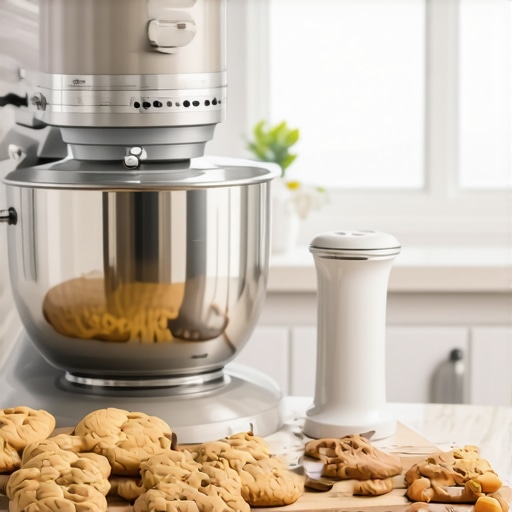
My Baking Journey: When I First Faced the Mixer Dilemma
I’ll never forget the first time I stood in my kitchen, eager to bake my grandmother’s legendary bread. The question was, should I invest in a robust dough mixer or start with a simple hand mixer? As someone passionate about baking but still learning the ropes, I found myself overwhelmed by the options. After years of experimenting and some delightful failures, I want to share my insights to help you make the best choice for your baking adventures.
Understanding the Heart of the Kitchen: What Do I Really Need?
When I started exploring mixers, I realized that the choice hinges on what I bake most often. If you’re into bread, pizza dough, or heavy batters, a stand mixer offers unmatched power and consistency. On the other hand, for quick cakes, whipped cream, or small batches, a hand mixer is lightweight, affordable, and surprisingly versatile. My experience taught me that understanding your baking style is essential before investing in any equipment.
Power and Performance: Do I Need a Heavyweight or a Lightweight?
From my personal perspective, a stand mixer is like having an extra hand in the kitchen. It handles heavy doughs effortlessly, saving me time and energy. Conversely, a hand mixer is more about convenience — I can quickly whip up meringues or mix pancake batter without much fuss. For those who, like me, enjoy baking frequently, the durability and power of a stand mixer justify the higher investment. Check out detailed comparisons on this resource.
Space, Budget, and Lifestyle: What’s My Reality?
One thing I learned early on is that your kitchen space and budget play significant roles. If you have a compact kitchen or limited funds, a hand mixer is a fantastic starting point. My own small apartment makes me appreciate the portability of a hand mixer, especially when I want to bake on a whim. However, if you love baking as a weekend hobby or professionally, investing in a sturdy stand mixer makes sense. It’s all about balancing your needs and lifestyle.
Why Do I Still Sometimes Feel Torn Between the Two?
This is a question I often ask myself. Honestly, both mixers have their place. I keep my hand mixer handy for quick tasks and my stand mixer for more ambitious baking projects. The key is to recognize that no single tool is perfect for everything. Wouldn’t you agree that having options makes us better bakers? If you’re curious about how to choose the right mixer based on your baking goals, this guide might be helpful.
I’d love to hear your thoughts—do you prefer the convenience of a hand mixer or the power of a stand mixer? Share your experiences below or explore more about which is better for dough baking to enhance your baking toolkit.
Beyond Basics: How Mixer Features Impact Your Baking Precision
When delving into the nuanced world of mixers, the features available can significantly influence your baking outcomes. For instance, a stand mixer often comes with multiple speed settings, planetary mixing action, and various attachments like dough hooks and whisks, offering versatility and control that can elevate your baking precision. These features are especially vital when working with complex recipes requiring specific textures or extensive kneading. Conversely, a hand mixer typically provides fewer speed options and limited attachments, but its simplicity can be advantageous for quick, straightforward tasks.
The Practicalities of Maintenance and Longevity
Another layer of expertise involves considering maintenance and durability. A stand mixer, designed for heavy-duty use, generally requires periodic cleaning of its attachments and head, but its robust build often translates into a longer lifespan. Proper maintenance ensures consistent performance over years, making it a wise investment for serious bakers. In contrast, a hand mixer demands less upkeep, yet its lighter construction may mean it wears out faster if used frequently for demanding tasks. Understanding these aspects helps you choose a tool that aligns with your long-term baking ambitions.
Expert Tips: Integrating Mixers into Your Baking Workflow
From an experienced baker’s perspective, integrating your chosen mixer seamlessly into your workflow can enhance efficiency and results. For heavy doughs, pre-measuring ingredients and using the stand mixer with a dough hook can save time and reduce fatigue. For quick tasks like whisking eggs or whipping cream, a hand mixer provides immediacy and ease. Mastering when and how to use each tool optimally is key to elevating your baking skills and achieving professional-level results.
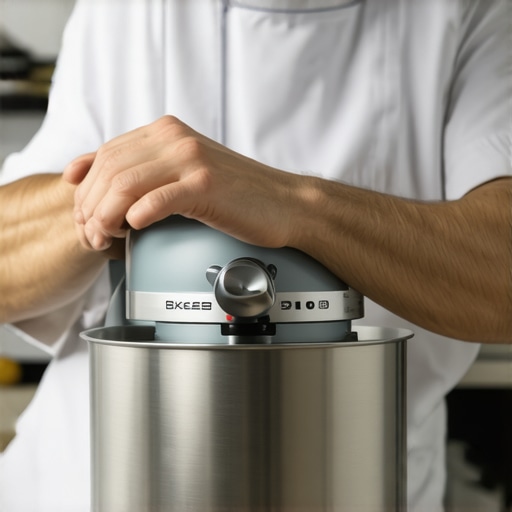
Image showing a professional baker using a stand mixer for bread dough and a hand mixer for whipped cream, illustrating practical application of both tools.
Can Hybrid Approaches Make Your Baking More Efficient?
One compelling question from an expert’s perspective is whether combining the strengths of both mixers can optimize your baking process. For example, starting a heavy dough in a stand mixer and finishing delicate batters with a hand mixer might offer the best of both worlds. This hybrid approach can be particularly advantageous for those who bake frequently or work with a variety of recipes, allowing flexibility and efficiency. Exploring how to balance these tools based on your baking repertoire is a nuanced strategy that can refine your skills and outcomes.
If you’re eager to deepen your understanding, I recommend reviewing detailed comparisons and practical advice in expert articles such as this comprehensive guide. Sharing your experiences or asking questions in the comments can also help foster a community of passionate bakers committed to mastering their craft.
Embracing the Nuances: When to Upgrade Your Mixer for Professional Results
Reflecting on my own baking journey, I realize that as my skills advanced, so did my appreciation for the subtleties of mixer features. Early on, I was content with a basic hand mixer, but over time, I found myself craving more control and power, especially when tackling complex recipes like artisan bread or delicate soufflés. This transition made me ponder—when do we truly need to invest in a higher-end stand mixer? The answer, from my experience, hinges on understanding the specific demands of your recipes and your long-term baking goals.
How Do Advanced Features Transform Your Baking Quality?
From my perspective, features such as planetary mixing action, multiple speed settings, and versatile attachments profoundly impact the final product. For instance, planetary motion ensures thorough mixing, reducing the risk of uneven textures—crucial for pastry doughs or whipped creams. Attachments like dough hooks or pasta makers, which can be added to a stand mixer, open new horizons, allowing us to experiment beyond basic baking. If you’re serious about achieving consistent, professional-level results, exploring these features becomes essential. For a detailed comparison of how such features influence outcomes, check out this resource.
Can Hybrid Approaches Elevate Your Baking Efficiency?
Absolutely. Combining the strengths of both mixers can streamline your workflow and elevate your baking. For example, I often start with my stand mixer to knead heavy bread dough, then switch to my hand mixer for whipping delicate meringues or small batches of batter. This hybrid approach allows me to leverage power and precision where needed, without sacrificing convenience. It requires some organization but can dramatically improve results and reduce fatigue, especially during intensive baking sessions. If you’re curious about integrating these tools effectively, this guide offers valuable insights.
What Are the Long-Term Maintenance Considerations for High-Performance Mixers?
From my experience, maintaining high-quality mixers is vital for longevity and consistent performance. Regular cleaning of attachments and keeping the motor clean and dry can prevent issues down the line. A well-maintained stand mixer, designed for heavy-duty use, can last for decades if cared for properly—making it a worthwhile investment. Conversely, a hand mixer, while easier to clean and store, may wear out faster under frequent, demanding use. Balancing maintenance needs with your baking frequency and ambitions is key. Insights from expert reviews emphasize that proper upkeep extends the lifespan of these tools, ensuring your investment pays off over time. For more about maintaining your equipment, explore this detailed guide.
How Do You Personalize Your Baking Equipment Choices?
In my own kitchen, I’ve learned that personalization is crucial. Do I prioritize power over portability? Do I need a compact model for small spaces or a multifunctional machine for diverse recipes? These questions shape my decisions. I also consider the brands and models that align with my baking style, reading reviews and testing features when possible. Sharing your experiences and preferences with a community of passionate bakers can provide valuable insights. I invite you to comment below and tell me—what has been your journey in choosing the right mixer? Perhaps your story can help others navigate this nuanced decision.
Final Reflection: The Art of Choosing Your Baking Partner
Ultimately, selecting between a stand mixer and a hand mixer—or finding the perfect balance—reflects your unique baking journey. Both tools have their place, and understanding the advanced features, maintenance needs, and your personal workflow can make all the difference. Remember, the best equipment is the one that empowers your creativity and helps you enjoy the process. I encourage you to explore further, experiment with hybrid approaches, and share your experiences. After all, baking is as much about passion and discovery as it is about tools.
Embracing the Evolution of Mixer Technologies
As my baking pursuits matured, I found myself increasingly drawn to the technological advancements that transformed traditional mixers into sophisticated culinary tools. Modern stand mixers now incorporate digital interfaces, programmable settings, and even Bluetooth connectivity, allowing for precise control and integration with recipe apps. This evolution not only enhances consistency but also streamlines complex baking processes, especially in professional environments where repeatability is crucial. For instance, the planetary mixing action optimized in high-end models ensures thorough ingredient incorporation, reducing human error and elevating the final product quality. To explore the latest innovations, I recommend reviewing authoritative sources like KitchenAid’s latest innovations, which exemplify this trend.
Assessing Long-Term Cost-Effectiveness of High-End Mixers
Investing in a premium stand mixer involves more than just initial expenditure; it demands an appreciation of its long-term value. Advanced models with durable materials and modular attachments tend to withstand rigorous daily use, translating into lower replacement costs over time. From my experience, the initial investment pays off through reduced maintenance needs and enhanced performance consistency. Moreover, the availability of specialized accessories—such as pasta makers, ice cream makers, or vegetable spiralizers—can expand your culinary repertoire without necessitating multiple standalone appliances. According to a detailed analysis by Consumer Reports, choosing a versatile, high-quality mixer can be a cost-saving decision in the long run, especially for dedicated home bakers or small commercial ventures.
Can Advanced Features Justify the Investment for Home Bakers?
This question has been a pivotal part of my journey. While professional-grade features like variable speed control, robust motor power, and intricate attachment systems seem tailored for industrial use, I’ve discovered that they offer tangible benefits even for passionate home bakers. For example, precise speed control allows delicate tasks such as folding in ingredients or whipping egg whites to optimal stiffness, avoiding over-mixing. The ability to program recipes and save preferred settings accelerates workflow during busy baking sessions, ensuring consistent results. If you’re contemplating whether these features are worth the investment, consider your baking frequency and recipe complexity. The detailed insights provided by this comparative guide can be instrumental in your decision-making process.
How Do I Customize My Equipment for Specialized Baking Needs?
Over the years, I have tailored my mixer setup to accommodate specialized baking projects, such as gluten-free bread or delicate pastries. Adding specific attachments, like a spiral dough hook for artisan bread or a wire whip for meringues, significantly enhances my precision and efficiency. Customization extends beyond attachments; selecting models with adjustable speed ranges and powerful motors ensures adaptability for unique recipes. For instance, my recent upgrade to a mixer with a planetary mixing mechanism has improved ingredient incorporation, especially in dense doughs. If you’re eager to optimize your equipment for niche baking pursuits, exploring options like this resource provides valuable guidance on feature selection and compatibility.
Integrating Smart Technologies for a Future-Ready Kitchen
Looking ahead, integrating smart kitchen technologies with traditional mixers offers exciting possibilities. IoT-enabled devices can monitor motor temperature, usage patterns, and even provide maintenance alerts, significantly extending equipment lifespan and performance. Such innovations are especially beneficial for those managing multiple baking stations or running a small bakery. From my perspective, adopting these smart systems transforms the kitchen into a connected ecosystem, where data-driven insights optimize efficiency and reduce downtime. Companies like Smart Kitchen Tech are pioneering this frontier, making it accessible even to dedicated home bakers. Embracing these advancements can be a game-changer, elevating your baking from routine to mastery.
Sharing Expertise: The Power of Community in Advanced Baking
Finally, I’ve found that engaging with a community of experienced bakers enriches my understanding of equipment nuances and innovative techniques. Participating in forums, attending workshops, and exchanging tips have introduced me to custom modifications and expert hacks that I wouldn’t discover alone. For instance, I learned how to modify mixer attachments for better compatibility with non-standard recipes, vastly expanding my creative possibilities. If you’re serious about elevating your baking craft, I encourage you to connect with fellow enthusiasts and share your insights. Your experiences might just inspire others to refine their tools and techniques, creating a vibrant, collaborative learning environment.
Things I Wish I Knew Earlier (or You Might Find Surprising)
Not Every Mixer Is Created Equal
When I first started baking, I thought all mixers were pretty much the same. Turns out, the differences in power, attachments, and build quality can dramatically impact your results. Realizing this early on saved me from unnecessary frustration and helped me invest wisely.
Size Matters More Than You Think
My small kitchen made me overlook the importance of compact design. A bulky stand mixer can take up valuable space, so I learned to prioritize models that fit comfortably without sacrificing performance. It’s all about finding that sweet spot between functionality and space.
Features Can Be a Double-Edged Sword
While extra speed settings and attachments sound tempting, I found that having too many options can be overwhelming. Sometimes, simplicity is best—especially if you’re just starting out.
Maintenance Is Key to Longevity
Regular cleaning and proper care extend the life of your mixer. I used to neglect this, but now I see it as an investment in ensuring my tools perform well for years to come.
Hybrid Approaches Are a Game Changer
Using a stand mixer for heavy doughs and a hand mixer for quick tasks can boost efficiency. I discovered that combining tools based on the job at hand makes baking more enjoyable and less tiring.
Technology Is Evolving Fast
Modern mixers now come with digital controls, smart features, and even Bluetooth connectivity. Embracing these innovations can help you achieve more consistent results and streamline your baking process.
Resources I’ve Come to Trust Over Time
- KitchenAid’s Official Website: Their detailed product guides and innovation updates keep me informed about the latest features and how they can benefit my baking.
- Consumer Reports: Their in-depth reviews and testing reports help me compare models objectively, saving me time and money.
- Serious Eats: Their expert articles on baking techniques and equipment give practical insights that I can apply directly in my kitchen.
- Reddit’s Baking Community: Engaging with fellow enthusiasts provides real-world tips and honest feedback that enrich my understanding.
Parting Thoughts from My Perspective
Choosing the right baking mixer is a personal journey that depends on your space, budget, and baking ambitions. I’ve learned that understanding the subtle differences—like feature sets and maintenance needs—can make all the difference in creating consistent, delicious results. Whether you opt for a powerful stand mixer or a versatile hand mixer, the key is to select tools that inspire your passion and fit seamlessly into your baking routine. If this resonates with you, I’d love to hear your story or any tips you’ve picked up along the way. Share it with someone who might find it helpful, and happy baking!

Reading about your baking journey really resonated with me, especially the part about feeling torn between a stand mixer and a hand mixer. I started with a humble hand mixer and quickly realized its limitations when I tried tackling heavier doughs. Switching to a stand mixer was a game-changer, offering the power and consistency I needed for bread and pizza dough. However, I still keep my hand mixer handy for quick tasks like whipping cream or small batches. I think the key is understanding your baking habits and space constraints. For anyone new to baking, do you find that having both types of mixers actually helps you be more versatile, or does it just clutter your kitchen? Would love to hear your thoughts on creating a balanced setup that fits your lifestyle!
Your story really struck a chord with me, especially the part about feeling overwhelmed when choosing a mixer initially. I remember my first purchase was a lightweight hand mixer, which was perfect for quick tasks, but I quickly outgrew it when I started experimenting with bread making. Investing in a reliable stand mixer transformed my baking routine, giving me the power and consistency I needed for heavy doughs. Still, I keep my hand mixer nearby for small, swift jobs like whipping cream or beating eggs. I’ve found that having both can be a real asset, but it also depends on your space and budget. Have you found that owning both actually increases your versatility, or do you think it creates unnecessary clutter? I’d love to hear your thoughts on managing multiple baking tools and how to choose the right combination for your kitchen—sometimes, a good balance optimizes the workflow.
Your story about facing the mixer dilemma really hit home for me. I remember when I first started baking, I also felt overwhelmed by the options. Initially, I bought a basic hand mixer for quick tasks, but as my baking got more serious, I realized it couldn’t handle the heavier doughs like bread or pizza. Switching to a stand mixer was like stepping into a new world of possibilities—more power, better consistency, and less physical effort on my part. Even now, I keep my hand mixer for small tasks or quick mixes. What do you think is a good balance for someone just starting out—buying a decent hand mixer first and then upgrading, or investing straight away in a versatile stand mixer? I’d love to hear how others have navigated this.
Reading your detailed experience really brought back my own dilemma when I was choosing my first mixer. I started with a basic hand mixer, thinking I only needed something small and easy to store, but I quickly ran into limitations when trying to knead bread dough or prepare large batches of batter. Upgrading to a stand mixer was a game changer, especially for those heavy tasks that require consistent power. Still, I like having my hand mixer for quick tasks like beating eggs or whipping cream. I think the key is understanding your most frequent baking needs and your kitchen space. Do you think it’s better to start with a versatile stand mixer if you plan to bake often or stick with a hand mixer and upgrade later? Would love to hear how others balance these choices in their kitchens.
Your story really hits home for me. I remember the initial dilemma of choosing between a stand mixer and a hand mixer vividly. I started with a basic hand mixer for its affordability and storage convenience, but quickly found that it struggled with heavier doughs like bread and pizza. Transitioning to a stand mixer was a game changer, providing the power and consistency I needed for those demanding recipes. Still, I keep my hand mixer for small tasks like whipping cream or beating eggs, as you do. It’s interesting how many of us find value in having both, despite the extra space they can take up. My question is, how do others manage their space when owning both? Do you find it enhances your baking or adds to clutter? I think the key is to identify the tasks you do most often and invest in the right tools that support those specific needs.
Reading your detailed account really made me reflect on my own baking journey. I initially started with a small hand mixer for its convenience, but as I began tackling more complex recipes like homemade bread and pastries, I quickly realized its limitations. Upgrading to a stand mixer was an eye-opener—such a difference in power and consistency. Still, I keep my hand mixer around for quick tasks and small batches, which keeps my kitchen versatile and efficient. I wonder, for others with limited space like me, do you find that owning both types of mixers actually saves time and effort, or does it just add clutter? I’ve found that organizing storage cleverly can make a big difference. What are your tips for managing multiple baking tools without cluttering the workspace? I’d love to hear your experiences with balancing efficiency and space in the kitchen.
I really relate to the initial dilemma you described. When I started baking, I was tempted to buy a powerful stand mixer right away, thinking it was the only way to go for serious baking. But I quickly realized that for lighter tasks and quick mixes, a hand mixer was so convenient, especially in a small kitchen like mine. I’ve found that owning both actually makes my baking more flexible—I can handle big bread doughs with the stand mixer and whip cream or beat eggs with the hand mixer. The key, I think, is to assess how often you do each type of baking and space you have. Personally, I keep the stand mixer on my countertop for heavy-duty baking weekends, but I store my hand mixer in a drawer for quick jobs. Have you considered a storage solution or station that can keep both accessible without cluttering? What’s been your biggest challenge in managing space with multiple tools?